Futh and his father’s visit to Ernst
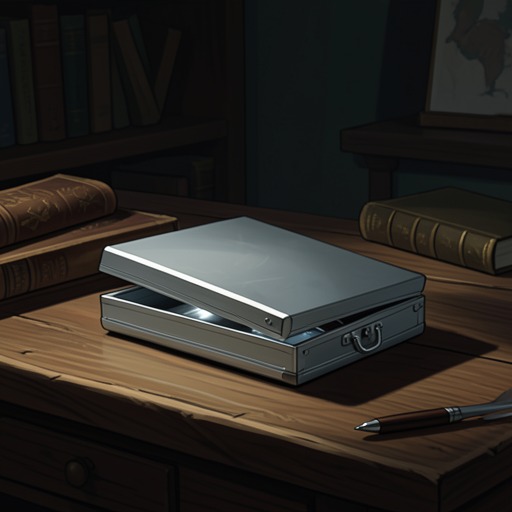
The Lighthouse (Alison Moore Edition)Futh and his father’s visit to Ernst is a remembered family encounter in Germany that turns an inherited object into the measure of an unresolved obligation. Futh arrives with the silver lighthouse hidden in his coat, but the visit ends without its return: his father says it has been broken, and Ernst, who considers it his inheritance, receives neither the object nor payment. The failure is not simply a matter of a missing keepsake. It exposes how an earlier generation’s departure, theft, and silence have left their descendants to face a claim they cannot fulfil.
Background and Purpose
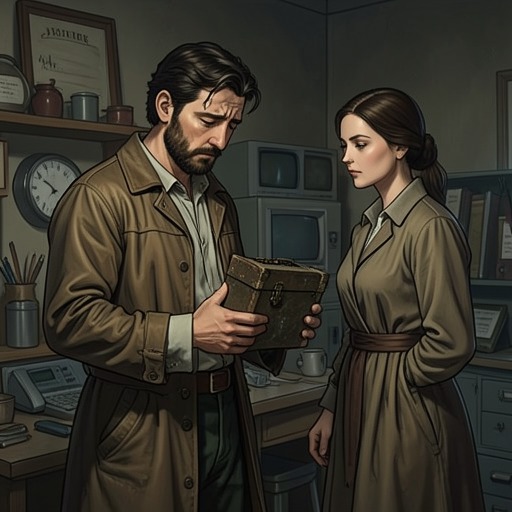
The visit takes place after Futh and his father have given up on their walk in Germany and decide to go to the home of Futh’s great-uncle Ernst. Futh has the lighthouse in a secret inner pocket of his kagoul. His father carries his own documents and money in a similar pocket, wary of hotel staff; the matching concealment makes the object’s hidden presence part of the visit from the outset. Futh had heard his grandfather ask his father to return the silver lighthouse to Ernst, the grandfather’s brother.
They have made no arrangements and do not know whether Ernst is still alive, whether he remains in his parents’ house, or whether the house still stands. The family attempts no contact beforehand. Their hotel is close enough for a day trip, and they go on the chance that something of the past may still be found. The uncertainty concerns not only the relative’s whereabouts but whether the old request can still be acted upon.
Arrival at Ernst’s House
They reach the house at lunchtime and find it standing, lived in, and well maintained. The busy road leaves them with a parking space some distance away. Futh’s father knocks lightly and steps back; the two wait, noticing a net curtain twitch at an upstairs window. They are almost ready to leave when the door finally opens. The delay gives the encounter a hesitant threshold: the visitors have come without warning, carrying an obligation Ernst may not know they intend to acknowledge.
Futh expects Ernst to resemble his grandfather, whom he remembers only as ill, faded, and shrunken before his death when Futh was eight. Instead, Ernst is large and solid. He recognizes Futh’s father’s greeting in German and, though frowning, steps aside to let them in. He takes their matching kagouls and leads them upstairs to the living room, shoos cats from the chairs, and goes to make coffee and a glass of milk for Futh. While he is away, the cats emerge from beneath the furniture and settle on the guests’ laps. The ordinary hospitality makes room for a conversation whose real subject is neither ordinary nor settled.
Ernst speaks German with Futh’s father, but Futh cannot follow much of it. When Ernst tells him that he looks like his brother did at the same age, Futh does not understand; Ernst learns that he does not speak German and says he should learn. The resemblance gives the family connection a physical form even as the language barrier leaves Futh outside the conversation about its history.
The Claim to the Lighthouse
Futh looks at the few photographs on the sideboard and mistakes an old portrait of his grandfather as a boy for a picture of himself. He realizes that a similar photograph beside it shows Ernst as a child. The mistake briefly makes the family’s generations seem interchangeable, but the portraits also reveal that Futh’s grandfather had written home and sent photographs. Futh takes comfort from this evidence of contact, supposing that his mother might have sent pictures too.
Ernst explains that his brother left after getting a girl into trouble and fearing a beating from her brothers. The family had apparently not been greatly surprised by his departure; what surprised them was that he took their mother’s few valuables. Those items were returned by post soon afterwards, except for the perfume bottle in its silver case. Ernst thinks his brother must have given it to Futh’s mother. Futh’s father answers that the bottle had remained intact in his own father’s possession into his eighties and had been given to his wife.
Ernst rejects that account as a justification for keeping it. The bottle had belonged to his mother, he says, and was his to inherit; it had value and ought to be returned. As an insect crosses the table, Ernst leans forward and crushes it with the back of his teaspoon, wipes the spoon on his trouser leg, and uses it to stir his coffee. The small, controlled gesture sits beside the larger dispute: the conversation calmly identifies a loss that cannot be undone.
Failed Restitution and Aftermath
Futh’s father says that he and his wife are separated and that he does not even have her address. After a pause, he adds that the bottle has been broken. Ernst looks at Futh drinking his full-fat, room-temperature milk; Futh looks back and feels sick. Ernst says that if the bottle cannot be returned, his brother should pay for it. His father then explains that his brother died several years earlier. Ernst studies both father and son, apparently considering whether someone else should be made to pay, but shakes his head and drinks his coffee.
The visit ends without a settlement. Futh’s father rises after finishing his coffee, and the cat falls from his lap; Futh struggles to stand and is scratched. Ernst leads them downstairs, takes their kagouls from the hook on the back of the front door, and hands each visitor his own. He looks hard at Futh before releasing the smaller garment, again connecting the boy to his grandfather through resemblance. Futh follows his father into the street and turns back to see whether Ernst is still watching. The walk to the car seems very long, and the hidden lighthouse bangs against Futh’s chest inside its small secret pocket.
That final physical detail gives the failed return its force. The bottle has been declared broken, its original owner is dead, and the person who might have been asked to repay Ernst is also gone. Yet the object remains present for Futh as something concealed and carried: a family claim that has passed to him without being resolved. The visit makes no restitution, but it changes the lighthouse from a private keepsake into the tangible remainder of a history whose debts cannot be neatly handed back.